The Laundry Room Reset: Dryer Vent Care, Smart Upgrades, and Local Savings
Give your laundry room a practical checkup. Learn when to clean or repair dryer venting, how to care for your washer, and what to check before buying new appliances
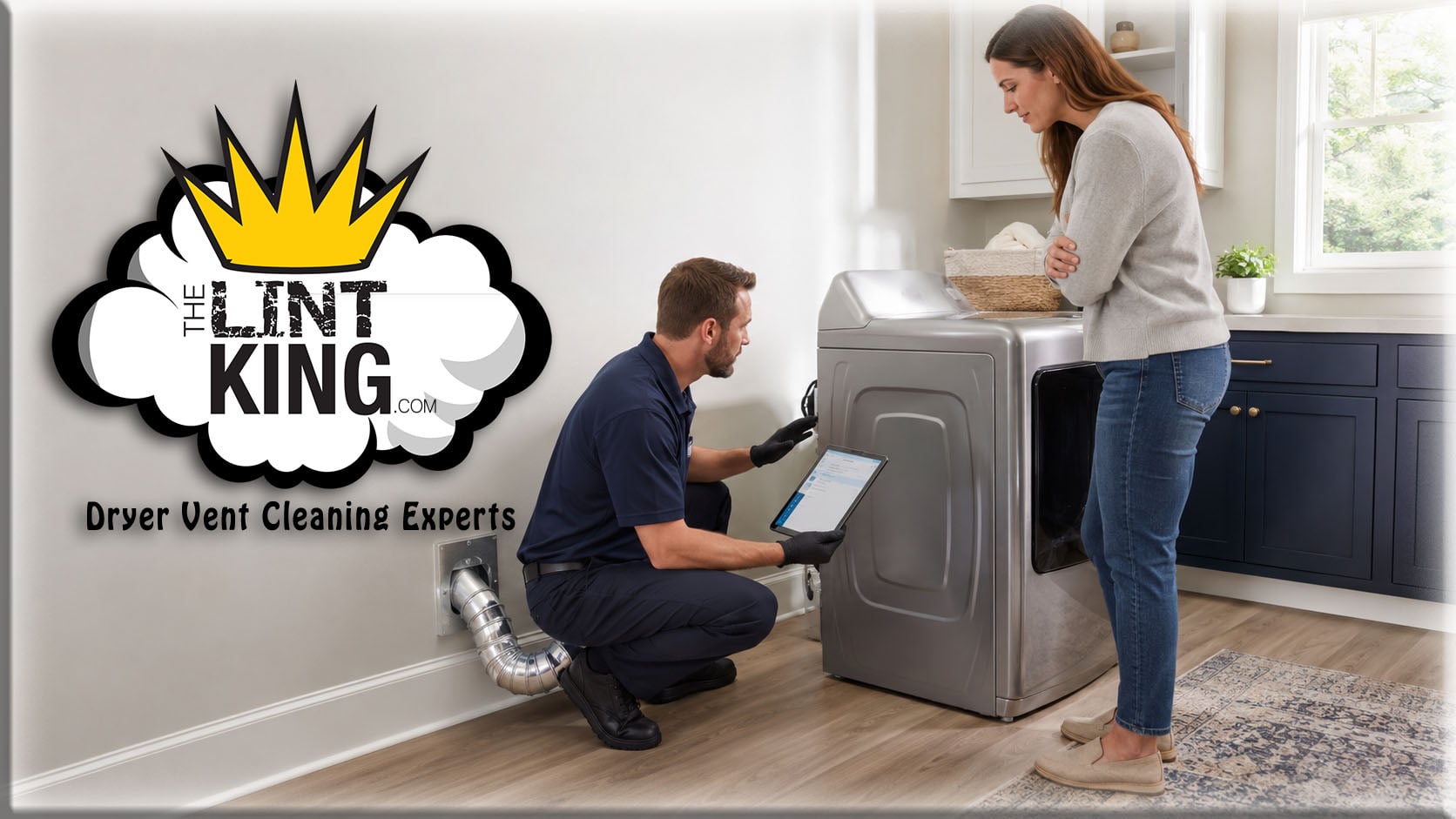
Find a dryer vent cleaning company. The Lint King Clothes Dryer Vent Cleaning Experts.
Call (847) 874 – 4805 Now for Service or Visit https://thelintking.com/
Give your laundry room a practical checkup. Learn when to clean or repair dryer venting, how to care for your washer, and what to check before buying new appliances
A professional cleaning should do more than remove the visible lint behind the dryer. The goal is to restore safer, smoother airflow from the appliance to the outside vent.
Learn six practical benefits of dryer vent cleaning, what The Lint King’s end-to-end service includes, how bird nest removal works, and when longer drying times may signal restricted airflow.
Cold, humidity, wind, snow, and ice can affect dryer airflow and drying time. Learn what Northern Illinois homeowners should inspect each season.

In today’s busy world, it’s easy to overlook essential home maintenance tasks that keep our households safe and efficient. One such critical task is dryer vent cleaning, a service frequently forgotten but vital for your home’s safety and performance. Thankfully, The Lint King – Dryer Vent Cleaning Experts are here to explain exactly why this simple maintenance step should never be ignored.
Regular dryer vent maintenance is not just about efficiency; it’s a critical safety measure. Lint build-up can pose a significant fire hazard.
Dirty dryer vents can contribute to longer cycles and higher energy costs. Learn what to watch for, how to estimate extra costs, and when to request help.
Before removing the nest, there are several steps you should take to ensure a safe and effective process. This article will guide you through inspecting the nest, removing it, cleaning the dryer vent, and adding bird and rodent covers to prevent future entry.
Dryer vents are an essential component of any home laundry system, but they are often overlooked when it comes to cleaning and maintenance.
Learn how to clean your washer and dryer drum, care for seals and lint filters, and recognize when your dryer vent needs professional attention.
Clothes dryer vent maintenance is a reliable method to speed up clothes drying.
Learn how lint buildup and restricted airflow can contribute to dryer fires, which warning signs matter, and how to build safer laundry habits
Learn what a dryer vent cleanout includes, which warning signs to watch for, how to check safely, and when to schedule professional help.
Prevent Dryer Fires with help from the Lint King
According to the US Consumer Products Safety Commission, annually, there are 16,500 residential fires caused by clothes dryers. How can we Prevent Dryer Fires?
Is your dryer taking longer to finish familiar loads? Here is a practical place to start. At The Lint King, we help homeowners understand the exhaust system behind their dryer and recognize when it needs attention. Professional dryer vent cleaning services address lint and airflow restrictions, while an inspection helps identify problems that cleaning alone cannot solve.
Laundry should fit into your day without repeated cycles becoming the routine. However, a restricted exhaust path can leave clothes damp and allow excessive heat to build. The U.S. Consumer Product Safety Commission explains that accumulated lint can obstruct airflow and contribute to dryer fires.[1]
Cleaning removes a source of restriction. It can support better performance when buildup is the problem, but it cannot guarantee a particular drying time, eliminate every fire risk, or repair a failing appliance. Understanding that distinction helps you choose the right next step.
A conventional vented dryer sends moist air outdoors. A ventless heat pump dryer handles moisture differently and does not need an exterior exhaust vent. If you have a ventless model, follow its specific maintenance instructions.[2]
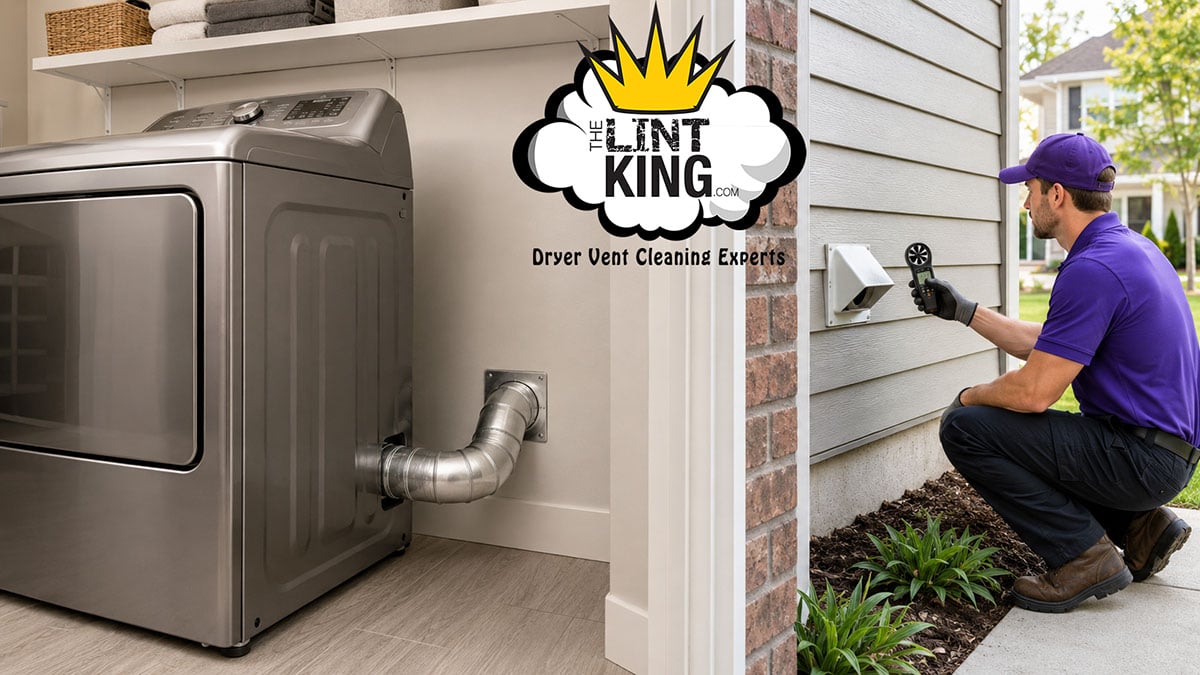
For a vented dryer, the lint filter is only one part of the system. The transition duct is the short connection between the appliance and the permanent ductwork. That ductwork continues to an outdoor outlet, often called the termination.
The filter catches lint, but some fibers pass farther into the exhaust path. Therefore, an empty filter does not establish that the entire vent is clear. Our related guide, 5 Signs You Need Dryer Vent Cleaning, explains the main warning signs.[3]
Start by comparing similar loads on familiar settings. A heavy blanket and a small load of shirts will not behave alike. Whirlpool identifies load size, fabric combinations, cycle selection, and ventilation as possible reasons for longer drying.[4]
Use these observations to describe the problem. They help guide an inspection; they do not diagnose the cause.
| What you notice | What to do next |
|---|---|
| Similar loads repeatedly need extra time | Check the filter, loading, settings, and vent condition. |
| Warm laundry remains damp | Arrange an airflow assessment if basic checks do not help. |
| The outdoor flap barely opens | Report possible restriction without climbing or reaching inside. |
| A burning smell or severe overheating develops | Stop using the dryer and arrange a qualified inspection. |
| There is no known cleaning history | Plan an inspection and establish a maintenance record. |
For additional explanation of these signs, see reference 3. If you see smoke or fire, leave the building and call 911. Do not keep running the dryer to investigate. The National Park Service advises arranging service before continuing to use a malfunctioning dryer.[5]
The Lint King describes a process that begins with inspection, continues through lint removal, and ends with a final review. Learn more at Why Choose The Lint King.[6]
The technician looks for accumulated lint, obstructions, and visible duct damage. Share any changes you have noticed, including when they began. Mention a recent dryer replacement or work near the laundry area, even if you are unsure whether it matters.
The published process describes rotary brushes and vacuum equipment for loosening and extracting buildup. It also addresses the lint trap area and connection points. Ask which portions of your system can be reached and whether any access limitation affects the work.
A final inspection, with testing when appropriate, helps evaluate the result. Before the visit ends, ask what was found, what was cleaned, and whether anything needs further attention. Keep the service notes with your appliance records.
Sometimes lint is only part of the problem. The Lint King lists disconnected ducts, broken sections, wet lint, standing water, and unsuitable plastic hose among conditions an inspection may uncover. Its residential service page also explains that dryer exhaust airway and transition duct cleaning are included.[7]
Cleaning cannot reconnect a separated duct or correct every installation problem. Ask the technician to explain the finding, the proposed correction, and any additional charges before work proceeds.
Likewise, poor drying can involve the appliance. Whirlpool notes that crushed connections, vent installation problems, blocked exhaust, and heating faults can require different responses. A suspected heating component problem belongs with a qualified appliance service professional.[8]
Before buying a replacement dryer, ask whether the existing exhaust path has been evaluated. A new appliance does not remove an obstruction in the house ductwork.
You do not need to diagnose the problem before scheduling. The Lint King asks homeowners to describe the dryer setup and exterior vent location, then provide clear access for the visit.[9]
Leave heavy appliance movement and difficult access to the professional. You do not need to climb onto the roof or disconnect equipment to prepare. If you rent or live in a condominium, ask your property manager who coordinates access and authorizes work.
The vent location, outlet height, accessibility, condition, and additional work can affect the final price. A short, accessible route may present different needs from an elevated outlet or a severely blocked system.
For current information, review Dryer Vent Cleaning Costs. Check the official page and confirm your estimate before booking because prices, qualifying conditions, and offers may change. Reference 7 explains the published service inclusions and pricing factors.
When comparing estimates, ask what each one covers. Does it include the connection behind the dryer? How are repairs handled? What happens if the outlet cannot be reached? Clear answers make the comparison more useful than a starting price alone.
Start with the maintenance your owner’s manual assigns to you. For the full exhaust route, consider whether you can identify and safely reach every necessary connection. Whirlpool recommends professional help when the duct or outside outlet is difficult to locate or access; see reference 8.
A brush kit does not tell you whether concealed ductwork is damaged or whether the setup meets your dryer’s installation requirements. If the route is unfamiliar, ask for an inspection before choosing a cleaning approach. Describe what you can see without dismantling anything.
Ask specifically. Cleaning the exhaust airway, filter area, and transition connection is not necessarily the same as opening the appliance cabinet. The Consumer Product Safety Commission recommends periodic interior chassis cleaning by a qualified service person; see reference 1. The chassis is the appliance’s main body or housing.
Confirm whether that work is included, available separately, or requires an appliance technician. This is especially helpful when comparing service descriptions that use different terms.
Once the technician confirms that the dryer can be used, observe familiar loads under comparable conditions. Record whether the original concern improves. If it continues, share those observations with the service provider instead of assuming another cleaning will solve it.
Keep the invoice and any photographs or recommendations together. A brief record helps you explain the system to another household member, a future technician, or a buyer when you eventually sell your home. Include any remaining access limitations in that record.
The U.S. Fire Administration recommends cleaning dryer vent ductwork every year. Use that guidance as a regular maintenance checkpoint, while following your appliance instructions and responding sooner when performance changes.[10]
Whirlpool also explains that cleaning needs depend on use, the items dried, and pet hair. Ask the technician whether your household should inspect or clean sooner, particularly after a significant blockage. See reference 4 for the manufacturer’s guidance.
If you recently bought your home, request previous service records. When none are available, arrange an assessment and start your own record. Save the cleaning date, observations, and any repair details so future visits have useful context.
Keep filter cleaning part of every laundry session. The U.S. Fire Administration advises cleaning the filter before and after each cycle, checking the connection behind the dryer for damage or crushing, and confirming that the outdoor covering opens during operation.[11]
Observe accessible areas from a safe position. If something appears damaged or blocked, arrange help. Routine observation should not require climbing, moving a heavy machine, or taking the appliance apart.
Also, leave room for laundry to tumble. ENERGY STAR explains that overloading slows drying because air needs space to circulate. Its guidance also describes moisture-sensing features that help avoid unnecessary drying. Use your manual to choose appropriate loads and settings; see reference 2.
Finally, keep the surrounding area uncluttered and run the dryer while you are home. The National Park Service includes both practices in its dryer fire prevention advice; see reference 5.
Whether you are settling into your first home or reviewing an established laundry routine, start with what you know. Notice changes, keep the filter clean, and ask questions when the exhaust system is unfamiliar.
The Lint King serves Northern Illinois communities. Before requesting service, check Northern Illinois Service Locations and confirm coverage for your address. Service boundaries and appointment availability can change.[12]
Ready to give your dryer vent some attention? Visit Schedule A Dryer Vent Cleaning to review the current booking options. Share your concerns, describe your setup, and let The Lint King help you understand the next step toward better laundry days.
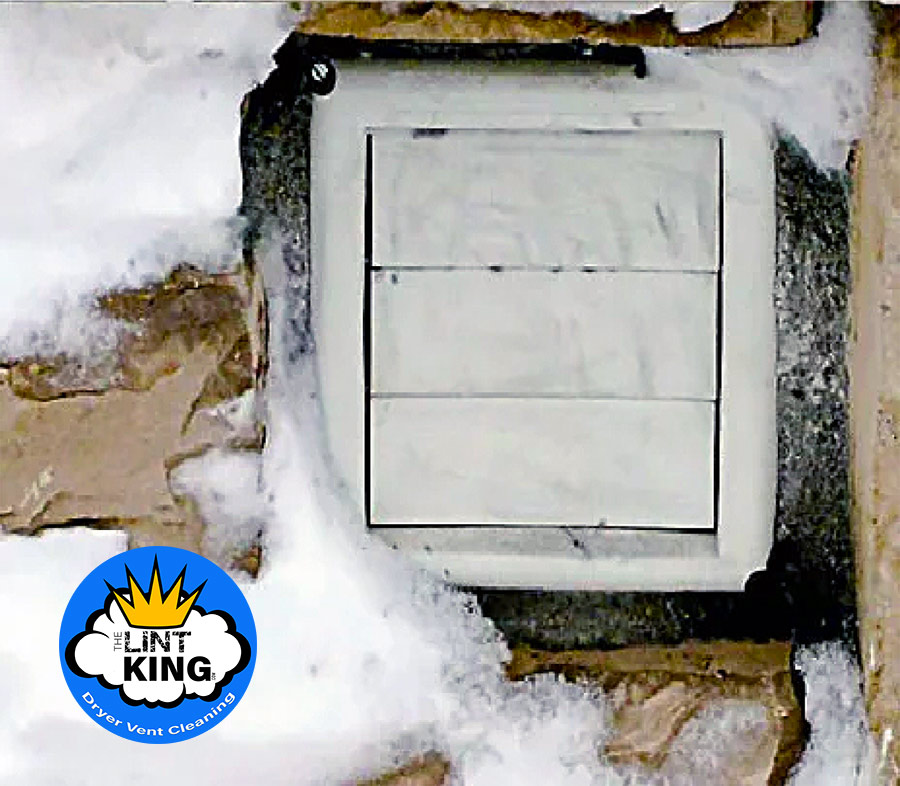
Safeguarding your home against dryer vent carbon monoxide risks is crucial, especially during winter months. Dryer vent blockage due to snow and ice accumulation poses serious safety concerns. When snow and ice obstruct your dryer vent flaps, lint, dust, and debris become trapped, leading to hazardous safety risks and reduced efficiency.
Primarily, snow and ice create barriers around your dryer vent opening, trapping lint and debris inside. Moisture buildup can further freeze, intensifying blockages. This trapped debris significantly reduces airflow, decreasing your dryer’s efficiency and creating safety hazards, including carbon monoxide risks.
A clogged dryer vent forces your appliance to operate harder, consuming more energy. Consequently, energy waste and higher utility bills are inevitable. Moreover, you’ll experience longer drying cycles, increasing frustration and appliance wear, contributing indirectly to dryer vent carbon monoxide concerns.
Restricted airflow heightens overheating risks. Electric dryers can suffer component damage and potential fires. Gas dryers face even greater dangers, specifically dryer carbon monoxide buildup. Dryer Fire Risk
Proper ventilation is critical for gas dryers. When snow or ice blocks exhaust fumes, hazardous dryer carbon monoxide gases can backflow into your home or workplace, causing severe health issues, including:
Electric dryers, although not producing carbon monoxide, can still dangerously overheat and pose significant fire risks.
Identifying these key signs early can prevent dangerous dryer vent carbon monoxide outcomes:
If drying clothes suddenly requires additional cycles or extra time, it’s indicative of vent blockage.
Clothes feeling unusually hot after drying signals restricted airflow and overheating.
Lint accumulating excessively around your laundry area or on freshly dried clothes signals vent blockage.
Lint gathering inside your dryer, particularly around the back panel or drum, clearly indicates blocked airflow.
If you suspect blocked dryer vents from snow, ice, or lint, immediate action is essential to prevent dryer carbon monoxide hazards. Contact The Lint King at (847) 874-4805 or conveniently schedule your inspection online 24/7.
Our certified technicians will:
The Lint King prioritizes your safety and satisfaction. Our trained professionals deliver prompt, efficient service, ensuring your home remains protected against dryer vent carbon monoxide risks. Using advanced techniques and specialized tools, we offer top-quality dryer vent inspection and cleaning services.
Protect your family, home, and appliances from blocked dryer vent dangers. Contact The Lint King at (847) 874-4805 today for professional dryer vent cleaning.

How Dirty Dryer Vents are Draining Your Wallet the Ultimate Guide – The Lint King
Here is a practical starting point for a safer, smoother laundry routine. At The Lint King, we want Northern Illinois homeowners to understand dryer vent cleaning without feeling overwhelmed. Whether you recently bought your first home or have used the same dryer for years, a few clear explanations can help you recognize problems and plan maintenance.
Welcome to our blog. Bring your questions, start with the basics, and use these tips to make informed decisions about your laundry room.
A conventional vented dryer moves warm air through tumbling clothes and sends moist exhaust outdoors. The route includes the lint filter, passages inside the appliance, the connection behind it, permanent ductwork, and an outside opening.
The connection behind the dryer is called a transition duct. The outside cover usually includes a damper, a flap that opens as exhaust leaves. Each part needs attention because a clean filter alone cannot confirm that the whole route is clear.
The U.S. Consumer Product Safety Commission explains that accumulated lint can restrict airflow, cause excessive heat, and contribute to fires. Cleaning therefore involves more than removing the lint you can see on the screen.[1]
This guide applies to vented dryers. Ventless heat pump dryers handle moisture differently and do not need an exterior exhaust duct. Follow your appliance manual for its specific maintenance requirements.[2]
Cleaning the lint filter is a useful habit that belongs with every load. The U.S. Fire Administration recommends cleaning it before and after each cycle and checking that the venting behind the dryer is not damaged, crushed, or restricted.[3]
However, everyday care and complete vent maintenance serve different purposes. Emptying the filter does not remove material farther inside the exhaust system. Likewise, buying a replacement dryer does not clean the existing ductwork connected to it.
Think of maintenance as an ongoing household responsibility. Keep the appliance manual accessible, know where the vent exits, and save service records. These small steps make future questions easier to answer.
The U.S. Fire Administration recommends cleaning dryer vent ductwork every year. That gives homeowners a clear starting point for planning maintenance.[4]
Next, consider how your household uses the dryer. The Lint King’s guidance highlights laundry volume, shedding pets, vent length, and turns as factors that influence cleaning needs. A busy laundry room may need closer attention than one used occasionally.[5]
Ask your technician to recommend a schedule based on the actual condition and layout. Do not wait for the next calendar reminder if drying performance changes beforehand.
If you recently moved, ask the previous owner for maintenance records. When the history is unknown, arrange an assessment instead of assuming the exhaust system was cleaned before the sale.
Start by comparing familiar loads. Are similar clothes taking longer on the same settings? Does the dryer feel unusually hot? Are you seeing lint near the outdoor opening?
These observations can help describe a concern, but they do not identify the cause by themselves. Load size, settings, washer performance, and appliance faults can also affect drying. Our guide, 5 Signs You Need Dryer Vent Cleaning, explains the differences.[6]
| Observation | Practical Next Step |
|---|---|
| Familiar loads repeatedly stay damp | Check the filter, load, and settings; arrange evaluation if the problem continues. |
| The visible connection looks crushed | Stop using the dryer until the restriction is corrected safely. |
| The outdoor flap stays closed during operation | Have the outlet and exhaust path checked for restricted airflow. |
| You notice a burning smell or severe overheating | Stop use and arrange qualified inspection before restarting. |
| The last cleaning date is unknown | Establish a maintenance record and schedule an assessment. |
If there is smoke, fire, or immediate danger, leave the home and call emergency services from outside. Routine service scheduling is appropriate only after any emergency has been addressed.
Remove collected lint and reinstall the filter correctly. Never operate the dryer without it. For cleaning beyond ordinary lint removal, follow the manufacturer’s directions. You can also explore Clothes Dryer Lint Trap Cleaning for additional background.
Without shifting a heavy appliance, look for obvious crushing, disconnection, or damage behind the dryer. Keep your check visual. Leave appliance disassembly and internal cleaning to a qualified service professional.
If there are no urgent warning signs and the dryer is operating normally, observe an accessible outlet from a safe position. The cover should open as exhaust leaves. A moving flap is a useful clue, although it does not prove that the entire duct is clean.
Avoid roof access, unsafe ladders, and reaching into the opening. Write down what you notice so you can explain it when requesting help.
Meanwhile, give clothes enough room to tumble. ENERGY STAR explains that oversized loads can take longer to dry because air needs space to circulate. Use the cycle recommended for the fabric and consider automatic moisture sensing when your dryer offers it. This feature helps limit unnecessary drying after clothes are dry.[2]
Also, keep the lint filter clean to support air circulation. These habits complement vent maintenance. They cannot clear a blocked duct or correct damaged venting.
When comparing performance, write down the load type and selected cycle. A note such as “the usual towels needed another cycle” gives a technician more useful context than simply saying the dryer seems slow.
Bird activity near a vent deserves attention. Nesting material can obstruct the exhaust route, while a damaged cover may leave the opening accessible. The Lint King offers Bird Nest Removal and exterior cover services.[7]
If you see nesting material or hear birds inside, stop using the affected vented appliance and request an assessment. Do not push tools into the opening or seal birds inside.
Before any cover is added, ask whether it is suitable for dryer exhaust and how it must be maintained. Outdoor protection should preserve airflow and allow cleaning access.
A useful service conversation starts with the complete exhaust route. Ask what will be inspected, which sections will be cleaned, and whether access limitations affect the work.
The Lint King’s Dryer Vent Cleaning FAQs describes attention to dryer airways, the hookup, ductwork, and the exterior outlet. It also explains the use of brushes, vacuuming, inspection, and final testing.[8]
Cleaning and repair are related services. A disconnected duct, damaged connection, or unsuitable material needs its own assessment. Ask for an explanation of any recommended correction before approving additional work.
Afterward, keep the service summary. If drying problems continue, share that information with the technician. An appliance fault may require separate diagnosis.
Before the visit ends, ask which areas were accessible, what was found, and whether anything needs followup. Request a clear explanation of the next recommended cleaning interval. Keep those answers with your receipt so the next service conversation starts with useful information about your home. You can share that record with other household members, too.
You do not need technical measurements to begin. Instead, gather the details you already know:
Also ask what access is needed. Clear movable household clutter before arrival, while leaving heavy appliance movement and utility connections to the professional.
For pricing, review Dryer Vent Cleaning Costs. The official page explains that location, height, accessibility, condition, and additional work can affect the price. Confirm current pricing and any offer terms before booking.[9]
Our blog is here to make maintenance understandable. Start with the question that fits your home today, then return when another question comes up.
For example, choose one place to keep dryer information: a home maintenance folder, a notebook, or a shared household calendar. Record the model number, service date, and any recommendations. Then make sure everyone who uses the dryer knows where the filter is and who to tell when something changes. Clear communication helps the whole household follow the same routine.
You are welcome here whether you are researching your first cleaning or organizing ongoing care. There is no need to know every ductwork term before asking for help.
Ready to take the next step? Review Dryer Vent Cleaning Near Me | Serving Northern Illinois to confirm coverage. Then visit Dryer Vent Cleaning Appointment Scheduling | The Lint King for current availability and preparation instructions.[10] We look forward to helping you understand your dryer vent and plan its care with confidence.