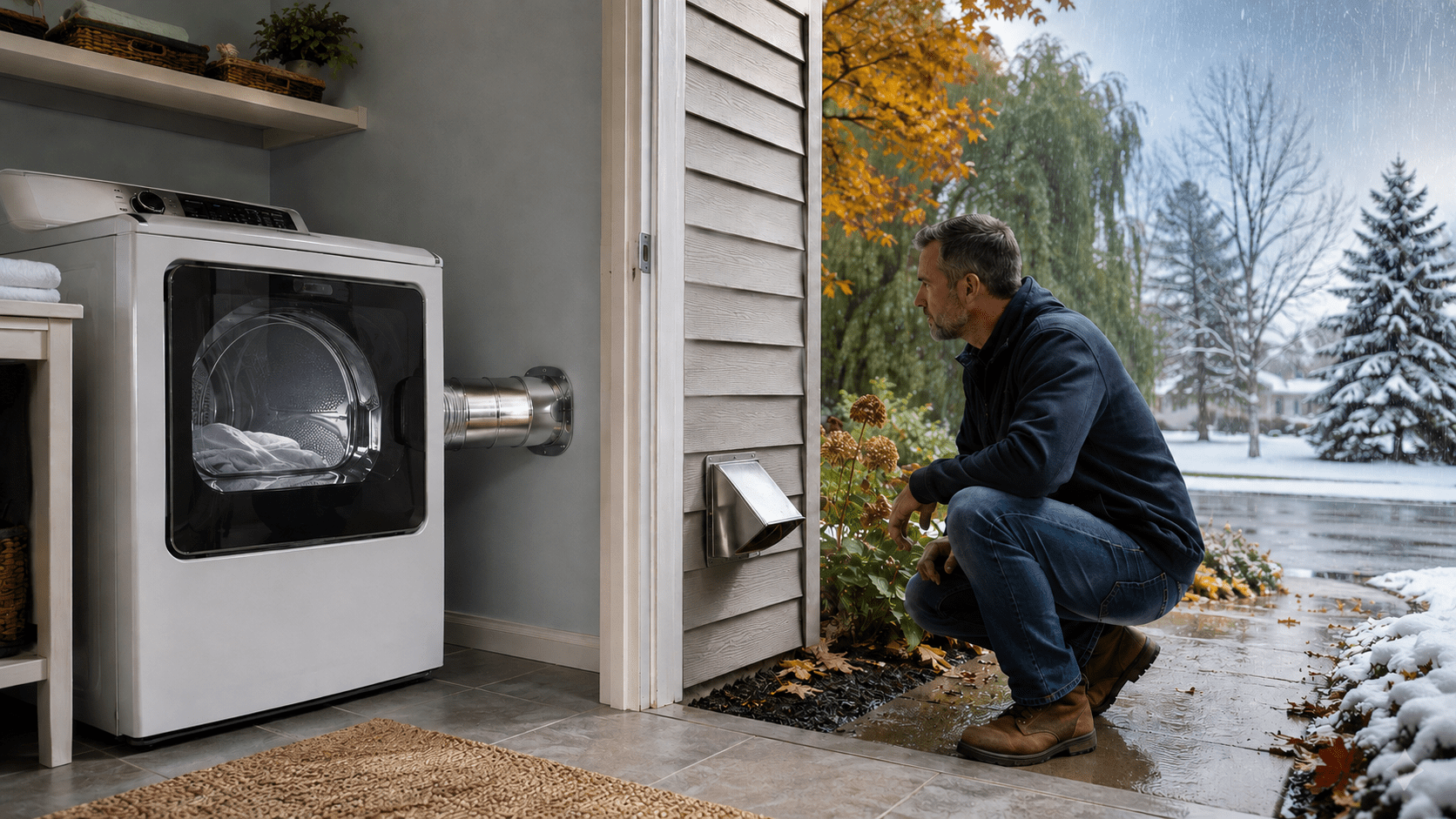
Higher dew points (indicating more absolute moisture in the air) reduce a clothes dryer’s ability to remove water from laundry and increase the likelihood of condensation inside the drum, door, or exhaust system. This applies mainly to vented electric or gas dryers; condensing and heat-pump (ventless) models are affected somewhat differently.
Quick refresher on dew point
The dew point is the temperature at which air becomes fully saturated (100% relative humidity), and water vapor starts to condense into liquid. A higher dew point means the air already holds more moisture, regardless of the current temperature or relative humidity percentage. Warm air can hold more water vapor than cold air, so high dew points are especially common in humid, warm conditions.
Effect on dryer performance
Vented dryers pull room air into the drum, heat it so it can absorb moisture from the clothes, then exhaust the humid air outdoors.
- When the intake air has a high dew point, it starts with less capacity to pick up additional moisture from the wet load. Drying takes longer and the dryer works harder.
- The effect is more noticeable in unconditioned spaces (basements, garages, utility rooms) that track outdoor humidity closely. In a well air-conditioned, drier laundry room it is milder.
- Other factors (clogged vents/lint, oversized loads, weak washer spin cycles, long or restricted ducts) usually dominate, but high ambient moisture makes marginal airflow problems worse and can add noticeable extra cycle time on very humid days.
Condensing and heat-pump dryers recirculate air and remove moisture by cooling it below its dew point so water collects in a tank or drains away. High ambient temperature or humidity can reduce the efficiency of their heat exchangers (making it harder to cool the process air enough), so cycles may also lengthen, though these machines do not exhaust moisture outdoors.
Condensation issues linked to the dew point
Condensation occurs whenever moist air contacts a surface at or below the dew-point temperature of that air.
- Inside the drum or on the door (even when the dryer is off)
Humid room air (high dew point) meets cooler metal surfaces. Water droplets form and can pool in the drum. This is common in basements or during humid seasons, and it means the next load starts with extra moisture, further slowing drying. Persistent dampness also promotes rust, mold/mildew, and musty odors. - In the exhaust duct
Hot, moisture-laden exhaust cools as it travels through the vent (especially uninsulated runs in attics, crawlspaces, or exterior walls). If the duct surface drops below the exhaust air’s dew point, liquid water forms. Wet lint sticks and builds up faster, airflow drops, mold can grow, and water may drip back toward the dryer or cause corrosion. - Backdraft from outdoors
A faulty or missing outdoor damper lets humid outdoor air (high dew point) enter the duct when the dryer is idle. That air then condenses on cooler interior surfaces.
High humidity can also make lint clump more readily, accelerating vent blockages that compound both performance and condensation problems.
Practical ways to reduce the impact
- Run a dehumidifier in the laundry area to lower room the dew point and absolute humidity.
- Keep the dryer door open between loads so residual moisture can escape.
- Ensure the exhaust system is clean, short, mostly straight, made of rigid metal, and properly insulated where it passes through cold spaces. Confirm the outdoor damper seals well and opens freely.
- Locate the dryer in a climate-controlled space when possible.
- Clean the lint filter after every load and have the full vent path inspected/cleaned regularly (more often in humid climates).
- For persistent condensation, check for temperature differences (cold room + humid air) or duct routing issues.
In short, a high the dew point loads the dryer with extra moisture from the start and creates opportunities for condensation wherever warm moist air meets cooler surfaces. Keeping ambient humidity lower and the vent system unrestricted minimizes both longer drying times and moisture-related problems.